

Your Most Profitable Customers Might Not Be the Ones You Think
Customer profitability is the ability to understand which clients contribute the most value to your business after considering the time, effort and resources required to serve them. Looking beyond revenue helps you make smarter decisions about pricing, service delivery and long-term growth.
Many business owners celebrate landing a new client.
Fewer stop to ask whether that client is actually profitable.
I've worked with enough businesses to notice a common pattern. Some customers generate steady revenue, communicate clearly, pay on time and become long-term advocates. Others may spend the same amount of money but consume significantly more time through endless revisions, frequent phone calls and last-minute requests.
On paper, they can look identical.
Behind the scenes, they couldn't be more different.
The businesses that grow sustainably tend to recognise this difference early. They understand that customer profitability isn't just about what a client pays. It's about what it costs to deliver that service.
Revenue only tells half the story
It's easy to assume that a client paying $5,000 is more valuable than one paying $2,500.
Sometimes that's true.
Sometimes it isn't.
Imagine two clients who both pay exactly the same fee.
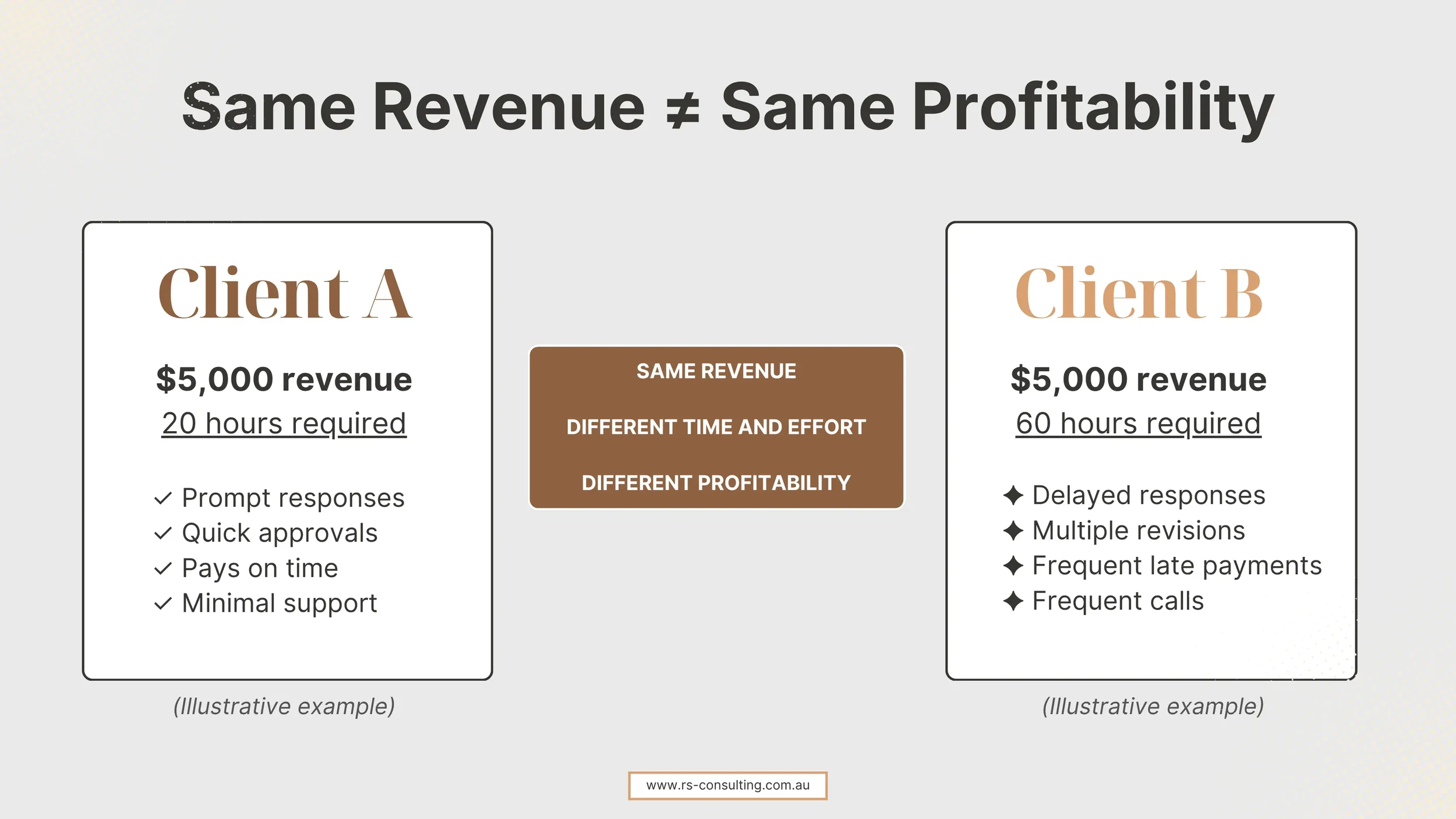
Two clients can generate the same revenue while requiring very different amounts of time and effort, resulting in different levels of profitability.
Both generate the same revenue, but one may require significantly more time and effort to service.
This is why it's important to look beyond sales figures. Revenue matters, but profitability tells a much more complete story.
Your time can reveal what's really profitable
Successful business owners often seem to know instinctively which clients deserve more attention.
Experience certainly plays a part, but numbers can help you identify these patterns much earlier.
I'm a big fan of timesheets, probably influenced by my time in audit. A detailed timesheet can show where your business is actually spending its resources, not just the hours you invoice.
Consider tracking time spent on:
Client meetings
Phone calls
Emails
Research
Preparing proposals
Drafting and revising work
Administration
Unexpected follow-up requests
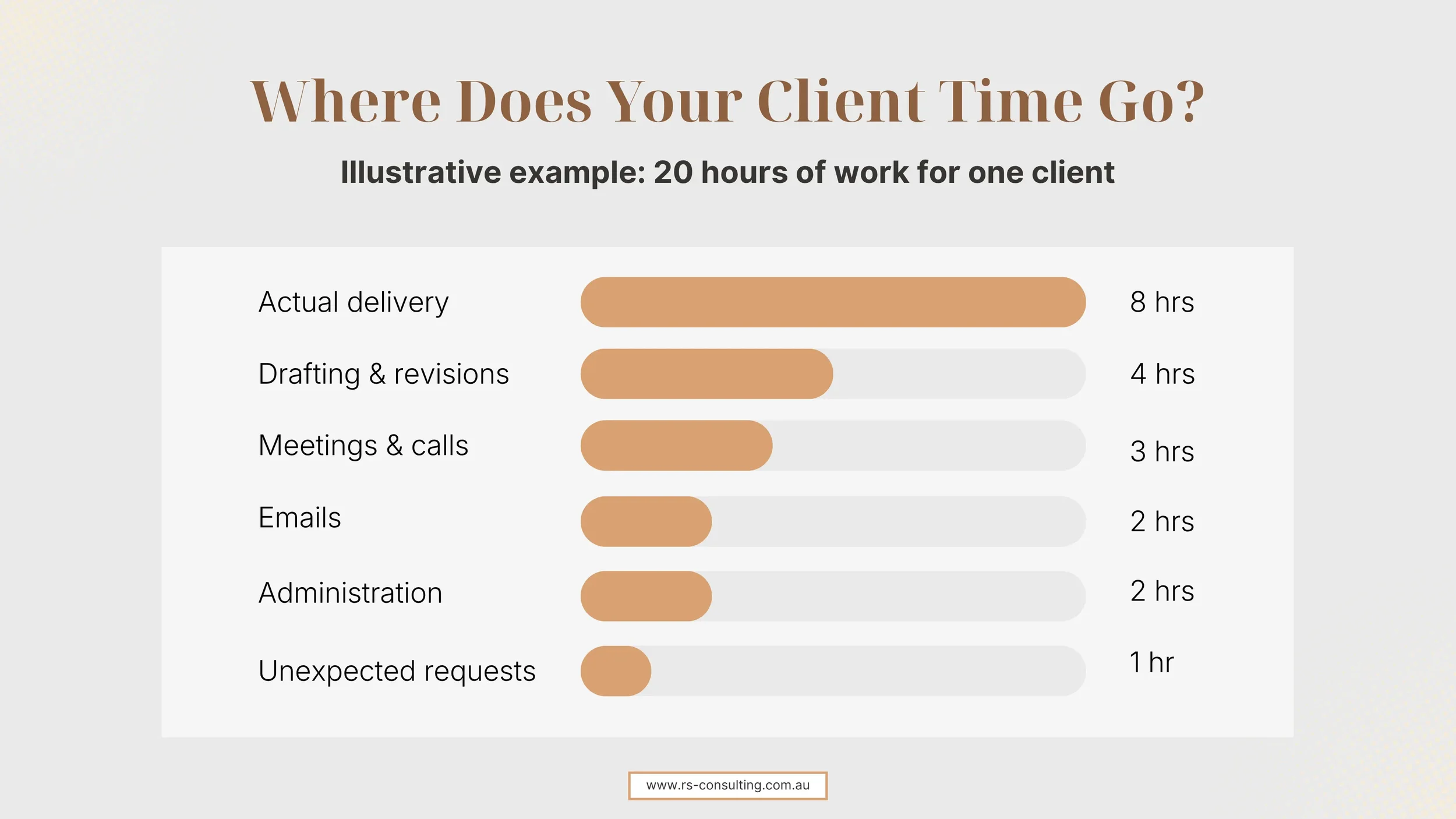
Tracking time across client activities can reveal how much of your working time is actually going into delivering the service.
Even tracking these activities to the nearest 15 minutes can uncover patterns you might otherwise miss.
After a few months, compare the time spent with what each client pays. You may start seeing which projects consistently deliver healthy margins and which quietly consume far more time than expected.
Scope creep can quietly eat into your margins
One of the easiest ways for a profitable-looking project to become less profitable is through scope creep.
A client might ask for an additional deliverable, another round of revisions or work that wasn't part of the original agreement. Each request may seem small on its own, but collectively, those extra hours can significantly change the economics of a project.
This isn't just a theoretical problem. Research from the Project Management Institute found that 52% of projects experienced scope creep or uncontrolled changes, up from 43% in its earlier research.
For a small service business, the scale may look very different from a large corporate project, but the underlying issue is the same: when the scope increases but the price doesn't, your margin gets squeezed.
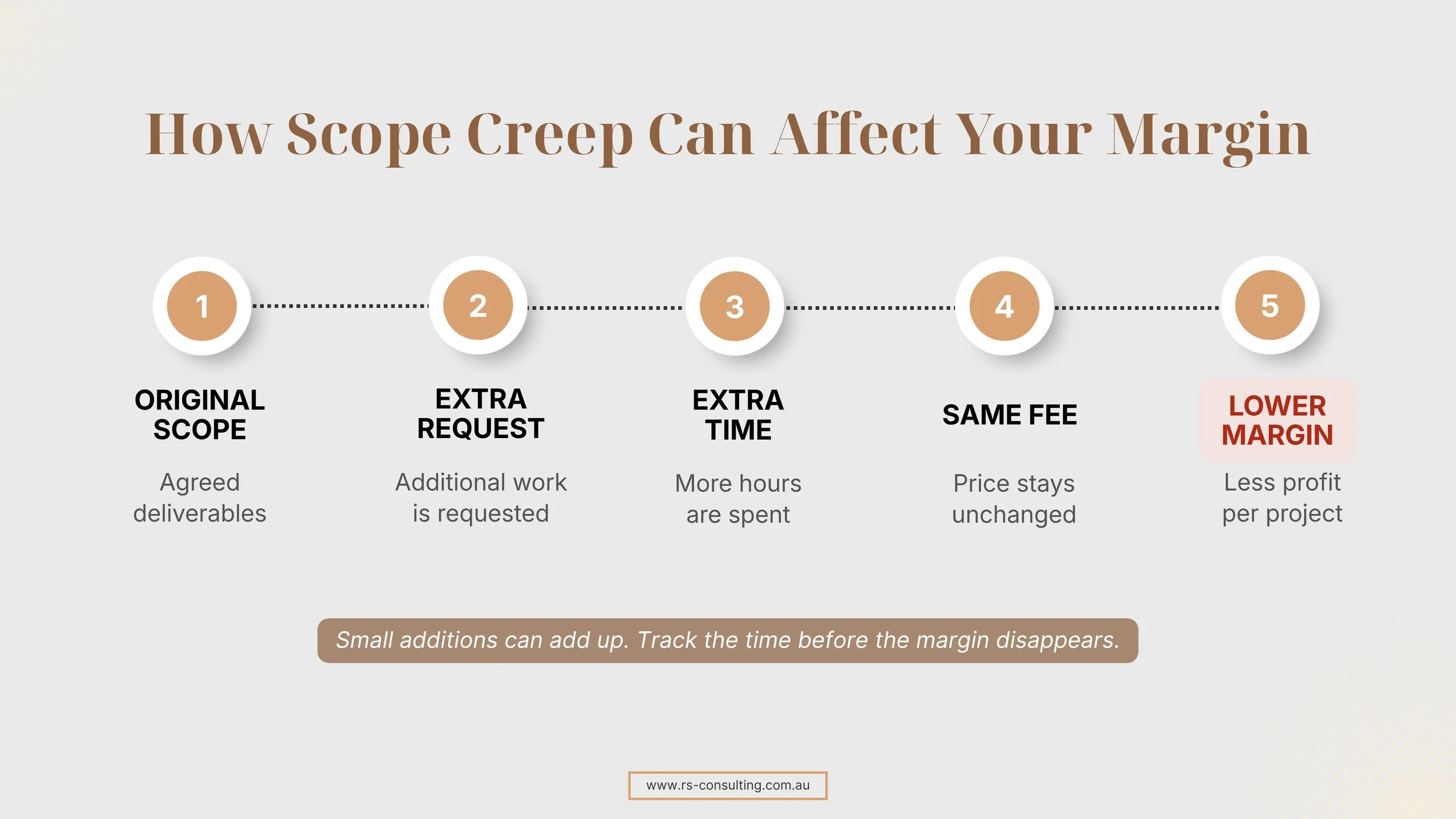
Scope creep can add hours to a project without increasing the fee, gradually reducing the margin earned from the work.
This is where detailed time tracking becomes particularly useful. If you consistently record the time spent on each project, you can see when "small extras" are becoming a significant part of the work.
You might then decide to:
Clarify what's included in your standard package
Set clearer expectations with clients
Charge separately for additional work
Adjust your pricing
Improve your change-request process
The goal isn't to refuse every additional request. It's to understand what that additional work is costing your business.
Your numbers tell stories that memory can't
Memory is useful, but it isn't always accurate.
A client might feel demanding because of one particularly difficult interaction, while another may quietly consume hours of administrative work that you barely notice.
That's where data becomes valuable.
A well-maintained timesheet and accurate financial records help remove some of the guesswork. Instead of relying on impressions, you can see how much time, effort, and cost each client requires.
Amy Gallo, a contributing editor at Harvard Business Review, put it plainly. Not every customer contributes the same value, since some generate more revenue while costing the business less to serve than others.
I've seen this play out repeatedly. A client who appears demanding may still be highly profitable because they value your expertise and are willing to pay for it. Another client may seem easy to work with, but repeated discounts, frequent scope changes or extensive administrative work can quietly reduce the profit you make.
Experience can help you spot patterns, but your numbers can show you whether those patterns are actually affecting your profitability.
Better decisions begin with better visibility
Understanding customer profitability isn't about labelling clients as "good" or "bad".
It's about making informed decisions.
Your data may help you:
Review your pricing structure
Identify services that consistently underperform
Adjust your onboarding process
Improve client expectations from the beginning
Focus your marketing on attracting similar high-value clients
These decisions become much easier when they're supported by evidence rather than assumptions.
One profitable client won't transform a business overnight. But consistently understanding which clients, services and processes contribute to sustainable growth can make a significant difference over time.
Sometimes the most valuable business decisions aren't hidden in complex financial reports.
They're already there in your numbers, simply waiting to be understood.
If you're looking for greater clarity around what your numbers are telling you, we'd be happy to discuss how better reporting and financial visibility can support more confident business decisions.
